🚨 Campaign Audit Summary: From Wasted Spend to Real Results
Before:
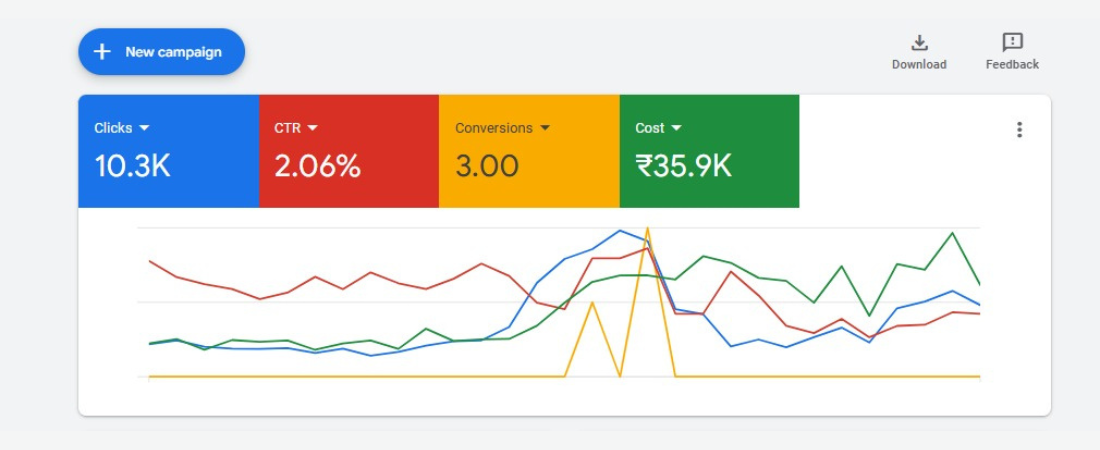
🔍 Identified Problems (Before Optimization)
When we first reviewed the campaign performance, several critical issues were holding it back from delivering results:
-
High Number of Clicks, but No Conversions
The campaign was attracting traffic, but it wasn’t converting. This pointed toward either poor traffic quality, misaligned messaging, or landing page friction. -
Low Click-Through Rate (CTR)
A CTR of just 2.06% indicated that the ads were not compelling enough or not shown to the right audience. This often reflects weak targeting or irrelevant ad copy. -
Higher Cost-Per-Click (CPC)
Despite driving a high volume of clicks, the cost per click was inefficient, meaning the budget was being spent on low-quality or irrelevant traffic. -
Poor Keyword Strategy
Broad and low-intent keywords were being targeted, which not only diluted the quality of traffic but also drove up costs unnecessarily. -
Conversion Tracking Not Set Up Properly
Without proper tracking, valuable leads were slipping through the cracks. It was impossible to measure real ROI or optimize for performance. -
Underperforming Display Campaign
Budget was being wasted on a display campaign that featured low-quality creatives, resulting in impressions but no engagement or conversions.
After:
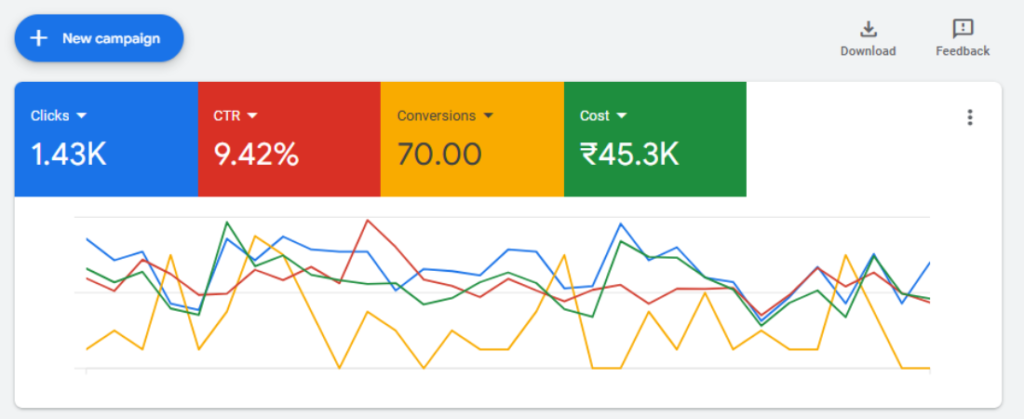
✅ Strategic Solutions We Implemented
After identifying these gaps, we rolled out a structured optimization plan to turn the campaign around:
Stopped Underperforming Display Campaigns
The old display ads were paused to immediately stop wasted budget. This allowed us to refocus on channels that drive high intent and better performance.
Rebuilt Keyword Strategy from Scratch
We conducted in-depth keyword research to identify high-intent, conversion-ready search terms. This ensured we were targeting users who were actively looking for solutions, not just browsing.Implemented the Right Keyword Match Types
We shifted from broad match to a more strategic combination of phrase match and exact match, which helped filter out irrelevant traffic and focus on users with real intent.Switched to ‘Maximize Conversions’ Bidding Strategy
Previously, the campaign was set to “Maximize Clicks” — optimizing for quantity, not quality. Switching to “Maximize Conversions” allowed Google’s algorithm to focus on users more likely to convert.Fixed the Conversion Tracking Setup
We ensured all conversion actions (form fills, calls, etc.) were being tracked accurately. This gave us clear visibility into campaign performance and prevented leads from going unnoticed.Crafted High-Converting Ad Copy
Ad copy was rewritten to align with user intent and highlight key value propositions. The messaging resonated better with the keywords and drove a stronger response.Allocated Budget for A/B Testing
We set aside a portion of the budget to test different ad variations — headlines, descriptions, and CTAs — and continuously optimized based on performance.Introduced a Strong Negative Keyword List
To prevent budget from being spent on irrelevant searches, we added negative keywords that filtered out unqualified traffic, improving campaign efficiency.
📈 Results After Optimization
- CTR improved from 2.06% to 9.42%
- Conversions jumped from 3 to 70
- Cost per conversion dropped from ₹11,966 to just ₹647
Overall ad spend became more efficient, targeting quality users with higher intent
🧠 Final Thoughts
This case perfectly illustrates that more clicks don’t mean better performance. By refining the targeting strategy, optimizing bidding, and ensuring clean tracking — we turned a struggling campaign into a high-performing lead generator.
If your campaigns are seeing traffic but not converting, it’s time for a deep dive — because data-driven decisions are the difference between wasted spend and measurable success.